
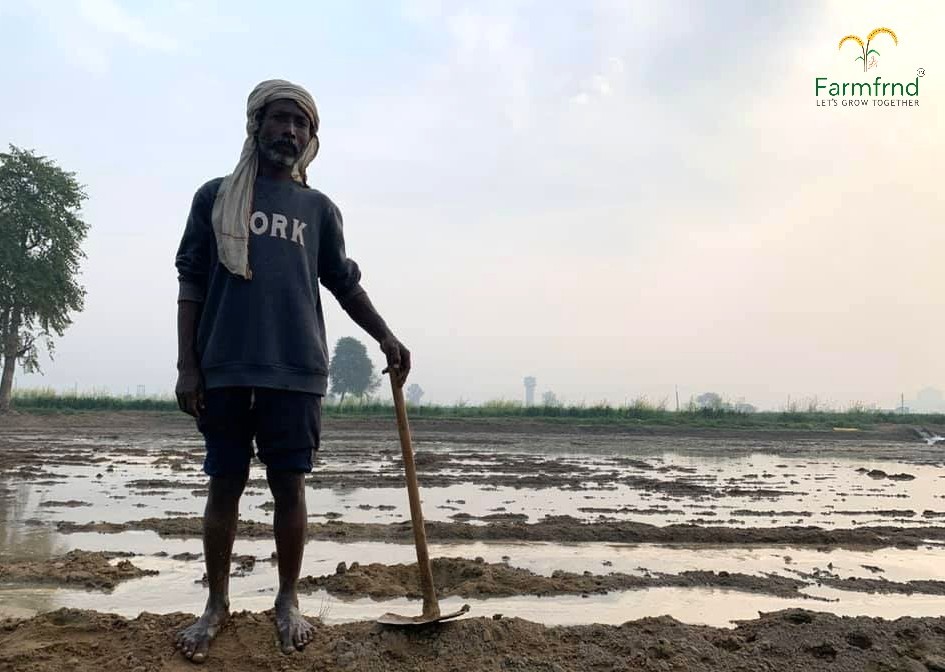
For India’s smallholder farmers who make up nearly 86 per cent of the agricultural community, the recently forged interim India-US trade agreement is raising serious concerns about market access, income security and long-term sustainability. It may be positioned as a step toward deeper economic cooperation, but what it feared mostly, at least right now, is that it is exposing our vulnerable farmers to global competition they are ill-equipped to face.
Most smallholders cultivate less than two hectares, operate with limited capital, and depend on local markets and minimum support prices. Any influx of cheaper imports from a highly subsidised agricultural economy like the United States directly threatens farmgate prices. It is in this context strengthening local, farmer-controlled market access becomes as critical as trade policy itself.
The pressure on oilseeds and animal feed markets illustrates this vulnerability. Imports such as US distillers dried grains with solubles (DDGS) may benefit large poultry famers, but they effectively bring down domestic oilmeal prices – hampering the prospects of small soybean and groundnut farmers. Without alternative local demand channels, such shocks often force distress-driven crop switching or exit from farming. Note that this ‘exit from farming’ has been happening historically but on a periodic basis; now the risk is that it could become more permanent vastly bringing down India’s own march to food independence.
In this scenario, hyperlocal digital platforms like Farmfrnd becomes increasingly relevant. Farmfrnd enables farmers to sell directly to nearby consumers, homestays, institutions, resorts, hotels and other community buyers. This will reduce dependence on volatile national and global commodity prices. Being GPS-enabled, it is proximity-based helping farmers retain value even when broader price signals turn adverse.
Edible oil imports pose a similar risk. As tariff-rate quotas expand, rain-fed oilseed farmers face rising costs and falling viability. Localised procurement and direct consumer access, especially for cold-pressed oils and fresh produce, can act as buffers against import-led price erosion.
The dairy sector, so far dominated by marginal farmers, is especially sensitive to price instability. While trade safeguards remain crucial, digitally enabled local procurement networks can help reinforce cooperative-style pricing and faster payments, insulating farmers from sudden market shocks.
Although export-oriented farmers may benefit from improved US market access, most smallholders remain excluded from export gains due to intermediaries. Platforms like Farmfrnd address this asymmetry not by chasing exports, but by strengthening domestic food sovereignty, shortening supply chains, and anchoring farmer incomes in local demand.
Ultimately, the challenge is not trade, but imbalance. Competing globally without strong local market resilience risks deepening inequality. As India navigates global trade agreements, farmer-first digital infrastructure like Farmfrnd can play a vital complementary role, ensuring that smallholders are not merely exposed to globalisation, but protected, empowered, and integrated into resilient local economies.
(Farmfrnd app is now being piloted in Kerala with the basic Buy, Sell and Exchange features and the GPS-enabled connections. The second version with more added features and commercial services will be release in a few months. Available on both Android and iOS.)
#indiaustrade #indiaus #agriculture #farming #istandwithfarmers #farmers #smallfarmers